Fall Home Maintenance Checklist: 12 Tasks and What It Costs to Skip Each One
A fall home maintenance checklist with sourced cost-of-neglect data for every task. Twelve jobs, dollar figures, and a free planner to track them.
By the Real Estate Ledger Team
Last updated: May 2026
Water damage already drives more than $13 billion in homeowner insurance claims every year, and the average frozen-pipe loss runs about $27,000 per claim once drying, demolition, and rebuild get totaled up. Most of that damage starts in October and November, when leaves clog gutters, attic insulation thins, and a furnace that has been idle since April gets asked to run twenty-four hours a day.
This fall home maintenance checklist is built around that math. Every task on the list maps to a specific failure mode, and every failure mode has a price tag pulled from insurer data, ENERGY STAR guidance, or industry repair averages. Use it as a fall home maintenance to do list you can finish in two weekends, or open each item in the Real Estate Ledger planner to track when you did the work, who you paid, and what the warranty says.
The autumn home maintenance checklist below is sequenced by urgency. Start with anything that involves water or fuel, because those are the failures that turn into five-figure claims overnight. Cosmetic items can wait for the next dry Saturday.

The Autumn Home Maintenance Checklist at a Glance
Print this fall home maintenance tasks table, tape it inside a kitchen cabinet, and check off each row as you go. The "Skip cost" column is the documented downside of leaving the task undone — not a sales pitch. The Planner Link column deep-links each row into the Real Estate Ledger planner so you can log dates, receipts, and warranty paperwork as you finish.
| # | Task | Who does it | Typical cost to do | Skip cost (sourced) | Planner Link |
|---|---|---|---|---|---|
| 1 | Clean gutters and downspouts | DIY or pro | $150–$400 | Foundation repair $7,500–$30,000 (InterNACHI) | Plan it → |
| 2 | Service the furnace | HVAC pro | $80–$200 | Repairs cost 3–10× more than maintenance (ACCA) | Plan it → |
| 3 | Replace HVAC filter | DIY | $15–$40 | 5–15% energy waste (ENERGY STAR) | Plan it → |
| 4 | Inspect chimney and flue | CSIA-certified sweep | $150–$350 | 17,000+ chimney fires per year (CSIA) | Plan it → |
| 5 | Drain and store outdoor hoses | DIY | $0 | $27,000 average frozen-pipe claim (Risk & Insurance) | Plan it → |
| 6 | Insulate exposed pipes | DIY | $20–$80 | Same as above | Plan it → |
| 7 | Test smoke and CO detectors | DIY | $10 batteries | Carbon monoxide intrusion risk (CSIA) | Plan it → |
| 8 | Reverse ceiling fans | DIY | $0 | Higher heating bill | Plan it → |
| 9 | Reseal exterior doors and windows | DIY | $10–$50 | 5–15% heating waste (ENERGY STAR) | Plan it → |
| 10 | Inspect roof and flashing | DIY visual or pro | $0–$400 | Fascia/soffit replacement $900–$6,800 (NRCA) | Plan it → |
| 11 | Aerate and overseed the lawn | DIY or pro | $50–$300 | Reseeding next spring $400+ | Plan it → |
| 12 | Test sump pump | DIY | $0 | Basement waterproofing $3,000–$10,000 (HomeAdvisor) | Plan it → |
Each row in the planner has a stable task ID, so you can also share a direct link with a contractor or spouse — realestateledger.io/planner?focus=fall_clean_gutters opens task 1, and the same pattern works for fall_service_furnace, fall_inspect_chimney, and the rest.
Water First: Tasks That Stop Five-Figure Claims
Lead with anything that handles water. A homeowner in St. Louis told us about an October weekend when a clogged downspout sent runoff against the foundation for six hours during a storm. The water tracked along a footing crack, soaked the basement carpet, and the dry-out plus replaced flooring came to $11,400 — well above the deductible, well below the $13,954 national average for a water-damage claim, and entirely preventable with a $250 gutter cleaning.
1. Clean gutters and downspouts. Bi-annual cleaning runs roughly $400–$900 a year, which is 1.4% to 6.4% of the average water-damage claim. InterNACHI flags clogged or poorly pitched gutters as one of the most common causes of foundation, fascia, and basement-water damage that inspectors document on home reports. Clear the troughs after the last leaves drop, then run a hose down each downspout and watch where the water exits. If it pools within four feet of the foundation, add a splash block or a flex extension before the freeze.
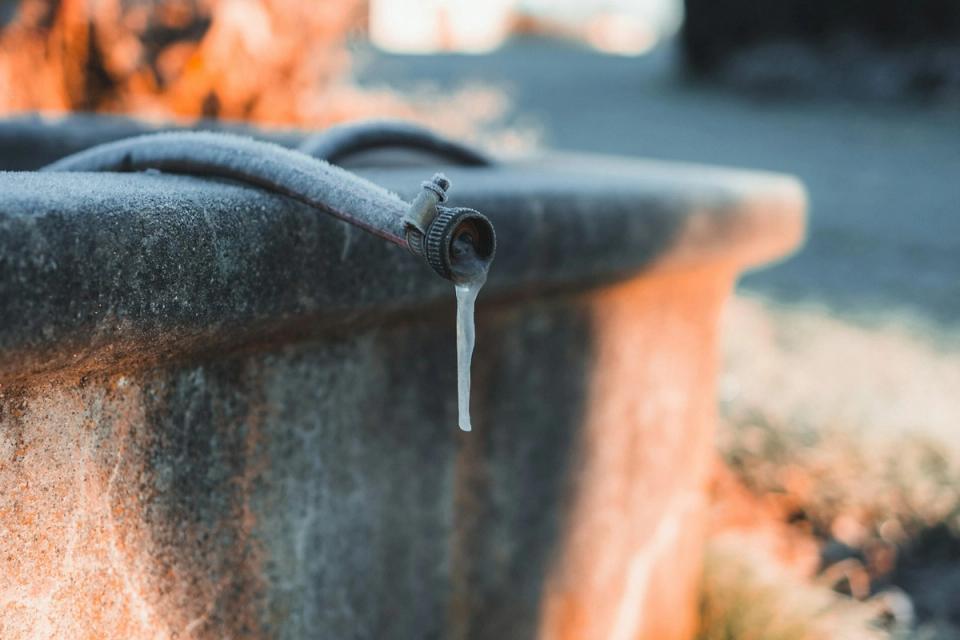
5 & 6. Drain hoses, shut off exterior bibs, insulate pipes. A study of 433 burst-pipe claims pegged the average loss at $27,000, and insurers will deny the claim outright if heat was off or pipes were unprotected in a vacant property. Disconnect every hose. Close the interior shutoff valve for each exterior bib, then open the bib outside to let it drain. Wrap any uninsulated pipe along an exterior wall or in a crawlspace with foam sleeves; a $30 bag of sleeves protects an entire basement.
12. Test the sump pump. Pour a five-gallon bucket of water into the pit and listen for the float to engage. If the pump hesitates, replace it before the first thaw — a $250 pump is cheaper than a $7,500 basement-waterproofing remediation.
Heating System: The Annual Tune-Up Pays for Itself
ENERGY STAR and the Air Conditioning Contractors of America both recommend a pre-season inspection every fall, regardless of climate. The reason is in the failure data: ACCA's Standard 4 (HVAC Quality Maintenance) ties most premature equipment failures to skipped or skipped-over maintenance tasks, and predictive-maintenance studies have documented 70–75% reductions in breakdowns when systems are tuned annually. Design Comfort reports that emergency repair calls run 50% to 100% more than scheduled service, and run-to-failure costs three to ten times more than a maintenance plan.
2. Service the furnace. Book the technician in September if you can — call volume spikes the first week the temperature drops below 50°F. A standard tune-up covers the heat exchanger, blower motor, ignition, gas pressure, and a combustion-analysis reading that catches carbon monoxide leaks before the detector does.
3. Replace the HVAC filter. ENERGY STAR recommends checking the filter monthly during peak heating and cooling. A clogged filter forces the blower to work harder, which wastes energy and shortens the motor's life. Stick a sharpie date on the new filter so you know when to swap it.
8. Reverse ceiling fans. Most fans have a small switch on the motor housing that flips the blades to clockwise for winter, pushing warm air down from the ceiling. It costs nothing and trims a percent or two off heating bills in rooms with vaulted ceilings.
9. Reseal doors and windows. Run a stick of incense along door frames on a windy day. Where the smoke jumps sideways, you have a leak — fix it with weatherstripping or a $5 tube of caulk. Sealing and insulating are among the ENERGY STAR tasks that deliver the fastest payback for cold-climate homes.
If you want a structured place to log the tune-up date, the technician's name, and the next service interval, our HVAC service history log gives you a template that matches what real estate appraisers and inspectors look for.
Fire and Air-Quality Tasks Most Checklists Skim
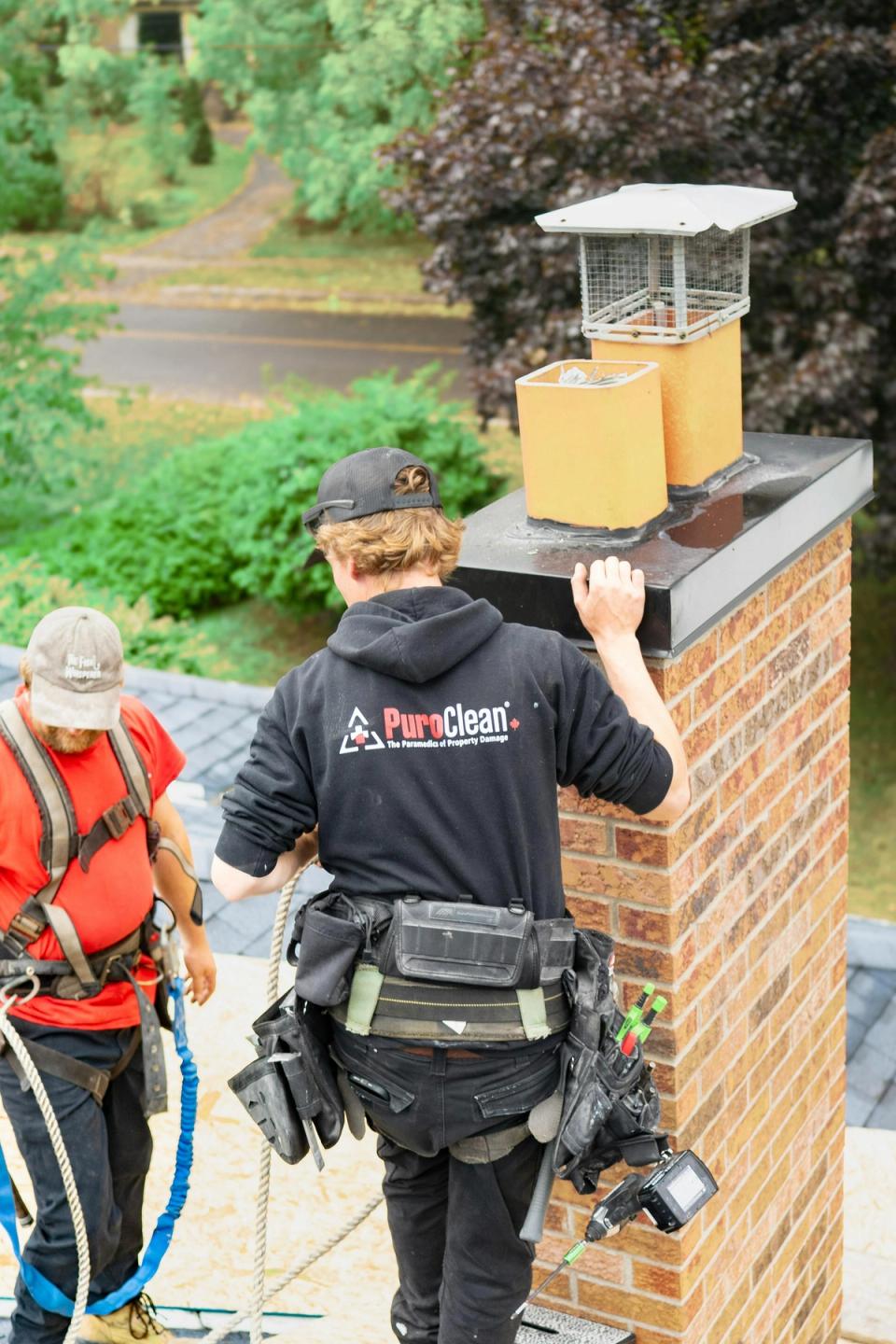
4. Inspect the chimney and flue. The U.S. Consumer Product Safety Commission and the Chimney Safety Institute of America both recommend an annual inspection by a CSIA-certified sweep before the first fire of the season. CSIA's slogan is blunt: "If you heat with it, inspect it every year." More than 17,000 residential chimney fires are reported annually in the U.S., and most start with creosote — a flammable byproduct of burning wood. Restricted air supply, unseasoned wood, and lower flue temperatures accelerate the buildup.
7. Test smoke and CO detectors. Press the test button on every detector. Replace the batteries even if the unit chirps fine. Detectors older than ten years are at the end of their service life — write the install date on the back of the new one in marker.
A homeowner in Maine bought a 1962 colonial and lit her first fire without a chimney inspection. The flue had a partial blockage from a squirrel's nest two summers earlier. Smoke filled the den within minutes, and the cleanup — soot remediation, a HEPA air scrub, repainting two rooms — came to about $4,200. A $200 inspection would have caught the nest before the fire was lit.
Roof, Yard, and Curb-Appeal Tasks
10. Inspect the roof and flashing. Walk the perimeter with binoculars and look for lifted shingles, dark streaks (algae, but also early wear), and missing flashing around the chimney and skylights. The National Roofing Contractors Association recommends a professional inspection at least every three years; fascia and soffit replacement runs roughly $900 to $6,800 once water gets behind a roof edge.
11. Aerate and overseed the lawn. Cool-season grasses (fescue, bluegrass, rye) recover better in fall than spring because soil is still warm and weed pressure has eased. Aerate first, then broadcast seed and a starter fertilizer. The work runs $50–$300 depending on lot size and saves a much larger spring reseeding bill.
If you are also collecting receipts and warranty paperwork as you go, our annual home maintenance schedule and broader home maintenance tracker give you printable templates that pair with this fall list. For the bigger picture across all four seasons, see our first-time homeowner maintenance checklist.
Track This Fall Home Maintenance Checklist in One Place
Real Estate Ledger keeps every task on this list, the receipts, and the warranty docs in one record tied to your property. When you sell, the next buyer sees a documented service history instead of a verbal claim. Plans start at $1.99/month and the first 30 days are free, no credit card required.
Frequently Asked Questions
What month should I start my fall home maintenance checklist?
Start in mid-September in most U.S. climates and finish before the first hard freeze, which arrives around mid-October in the northern third of the country and mid-November further south. HVAC service slots fill fast once temperatures drop below 50°F, so book that appointment before you start the outdoor tasks.
How long does a fall home maintenance to do list usually take?
Plan on two weekends for an average single-family home. The first weekend covers gutters, exterior water shutoffs, hose drainage, and the roof inspection. The second weekend handles the furnace tune-up (the technician does the work; you supervise), filter changes, weatherstripping, lawn aeration, and detector testing. Larger or older homes can stretch to three weekends.
Is a winterizing home checklist different from a fall maintenance checklist?
There is heavy overlap, but a winterizing checklist focuses narrowly on freeze prevention — pipe insulation, hose disconnection, sprinkler blowouts, sump-pump testing, and heating-system readiness. A fall checklist also includes seasonal tasks that have nothing to do with freeze protection, like leaf cleanup, lawn aeration, gutter cleaning, and chimney inspection.
How much should I budget for fall home maintenance?
A homeowner who hires out the gutter cleaning, furnace tune-up, and chimney inspection typically spends $400–$900 in fall service costs, with another $50–$150 in DIY supplies (filter, weatherstripping, pipe sleeves, batteries). That total represents roughly 3–6% of a single water-damage insurance claim, which is the math that makes the work worth doing.
Do I really need a chimney inspection if I only burn a few fires a year?
Yes, if you burn anything at all. Creosote builds up regardless of frequency, and even a partial flue blockage from animal nesting can cause smoke or carbon monoxide intrusion the first time you light up. CSIA recommends annual inspection for any fuel-burning appliance, including gas fireplaces and pellet stoves.
A Note on Sequencing
The order on this fall home maintenance checklist is not arbitrary. Water tasks come first because they fail the loudest and cost the most. Heating tasks come second because contractor availability disappears once weather turns. Cosmetic tasks come last because they are the only ones that can safely slide into next weekend. Complete this autumn home maintenance checklist in the sequence shown — if you only have one Saturday, do tasks 1, 5, 6, and 12 — that is the cluster that prevents the claims insurers see most often in November and December.
References
- ENERGY STAR. Maintenance Checklist for Heating and Cooling.
- Chimney Safety Institute of America. Preventing Chimney Fires.
- Risk & Insurance. We Studied 433 Burst Pipe Claims — Here's What You Need to Know Before Winter Arrives.
- Insurance Information Institute. Facts + Statistics: Homeowners and Renters Insurance.
- Air Conditioning Contractors of America. ACCA Standard 4 — HVAC Quality Maintenance of Residential HVAC Systems.
- International Association of Certified Home Inspectors (InterNACHI). Gutters: Inspection Guide.
- National Roofing Contractors Association. NRCA Homeowner's Guide to Roofing.
- HomeAdvisor. Cost to Clean Gutters and Downspouts.
- Design Comfort. Studies Show HVAC Maintenance Pays for Itself.
Frequently Asked Questions
What month should I start my fall home maintenance checklist?
Start in mid-September in most U.S. climates and finish before the first hard freeze, which arrives around mid-October in the northern third of the country and mid-November further south. HVAC service slots fill fast once temperatures drop below 50°F, so book that appointment before you start the outdoor tasks.
How long does a fall home maintenance to do list usually take?
Plan on two weekends for an average single-family home. The first weekend covers gutters, exterior water shutoffs, hose drainage, and the roof inspection. The second weekend handles the furnace tune-up (the technician does the work; you supervise), filter changes, weatherstripping, lawn aeration, and detector testing. Larger or older homes can stretch to three weekends.
Is a winterizing home checklist different from a fall maintenance checklist?
There is heavy overlap, but a winterizing checklist focuses narrowly on freeze prevention — pipe insulation, hose disconnection, sprinkler blowouts, sump-pump testing, and heating-system readiness. A fall checklist also includes seasonal tasks that have nothing to do with freeze protection, like leaf cleanup, lawn aeration, gutter cleaning, and chimney inspection.
How much should I budget for fall home maintenance?
A homeowner who hires out the gutter cleaning, furnace tune-up, and chimney inspection typically spends $400–$900 in fall service costs, with another $50–$150 in DIY supplies (filter, weatherstripping, pipe sleeves, batteries). That total represents roughly 3–6% of a single water-damage insurance claim, which is the math that makes the work worth doing.
Do I really need a chimney inspection if I only burn a few fires a year?
Yes, if you burn anything at all. Creosote builds up regardless of frequency, and even a partial flue blockage from animal nesting can cause smoke or carbon monoxide intrusion the first time you light up. CSIA recommends annual inspection for any fuel-burning appliance, including gas fireplaces and pellet stoves.
Track This Fall Home Maintenance Checklist in One Place
Real Estate Ledger keeps every task on this list, the receipts, and the warranty docs in one record tied to your property. When you sell, the next buyer sees a documented service history instead of a verbal claim. Plans start at $1.99/month and the first 30 days are free, no credit card required.
Get started freeRelated Checklists
Spring Home Maintenance Checklist: 14 Tasks That Pay for Themselves
Spring home maintenance checklist with sourced cost-of-neglect data for every task: gutters, AC tune-up, roof, dryer vent, and more. Free planner included.
11 min readSummer Home Maintenance Checklist: 12 Tasks Worth Doing Before August
A summer home maintenance checklist with 12 dated tasks, sourced cost-of-neglect data, and one-click planner deep-links. Free printable version included.
11 min readWinter Home Maintenance Checklist: 12 Tasks (and What Skipping Each One Actually Costs)
Winter home maintenance checklist with sourced cost-of-neglect data for each task. 12 jobs, repair price ranges, and a free planner you can save to your home.
9 min readHome Maintenance History Report: Complete Checklist for Homeowners
Build a home maintenance history report that tracks every repair and service call. Use our checklist to document your house maintenance history.
5 min read