What Is a Punch List? Definition, Process, and What It Means for New Construction Buyers
Punch list definition, where the term came from, and the step-by-step process from substantial completion to final walkthrough — for builders and new homeowners.
By the Real Estate Ledger Team | Last updated: May 2026
"Punch list" is one of those construction terms everyone in the industry uses and few homeowners understand, and yet it is the single most important document at the end of a new construction project. It decides when the builder gets paid, when you take legal possession, and what is on the hook to be fixed before final completion. For anyone buying a brand-new home, a punch list is the difference between moving in with confidence and chasing a builder for six months to finish things that should have been done before closing.
This guide answers the question literally: what does punch list mean in construction, where did the term come from, who creates it, and how does the process actually run from substantial completion to final walkthrough. The construction project management industry has built whole software categories around the punch list, but the document itself is older than the internet, and the underlying process is simpler than most builder websites make it sound.
Punch List Definition and Where the Term Came From
A punch list is a written record of work items that remain to be completed or corrected at the end of a construction project, generated as the project approaches substantial completion. Each item names a specific defect or incomplete task, who is responsible, and when it must be resolved. The general contractor signs off as items are finished, and final payment is not released until every line is cleared.
The term itself dates to mid-twentieth-century jobsite practice. According to Wikipedia's punch list entry, which traces the etymology to the 1950s, contractors would carry a paper list around the site and physically punch a hole next to each item once it was finished. That literal, mechanical record of progress is where the name came from. The hole punch has been gone for decades; the name stuck. In the UK and Ireland the same document is called a "snag list," and federal contracts sometimes call it a "deficiency list," but the punch list is the dominant North American term.
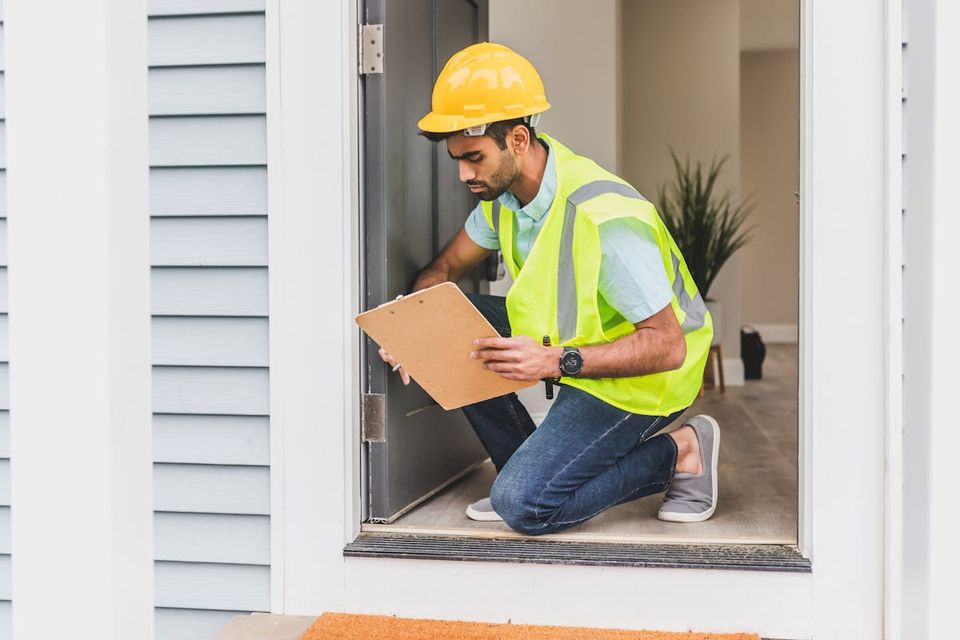
If you have ever seen a builder walk a finished house with a clipboard, a roll of blue painter's tape, and a phone camera, you have watched a modern punch list being generated. The blue tape marks the defect; the photo and the clipboard record what needs to happen next.

What a Punch List Contains
A punch list is not a wish list. It is a structured record of contract deficiencies, and a good one is specific enough that any tradesperson reading it can fix the item without calling for clarification. The format varies by builder and by software, but every well-written line item answers four questions: where, what, who, and by when.
Typical punch-list contents include:
- Cosmetic touch-ups (paint scuffs, nail pops, drywall dings, caulk gaps)
- Hardware and fixture issues (sticky doors, missing cabinet pulls, loose handrails)
- Trim and finish work (gaps at baseboards, miscut corners, uneven grout)
- Mechanical and system tests (HVAC short-cycling, GFCI outlets that won't reset, slow drains)
- Appliance defects (scratches, missing parts, units that fail their startup test)
- Exterior items (landscaping callouts, downspout direction, garage-door sensor alignment)
- Code-related corrections flagged at the final inspection
- Incomplete items deferred for backordered materials, specialty trades, or weather
According to NAHB's Residential Construction Performance Guidelines, the industry standard published by the National Association of Home Builders, each item should include a specific location, a description of the defect, and the required correction. "Master bathroom vanity left door binds when closing" is a usable punch-list line. "Door problem" is not. Photos attached to each item eliminate interpretation ambiguity later, which matters when a different crew shows up six weeks later to fix the issue.
For new construction, items that show up on inspection day but cannot be completed before closing (a backordered range hood, sod that won't take until spring, a custom-order light fixture) get listed with a target completion date and roll into the builder's deferred-completion schedule. They are not warranty items unless they remain open past the punch-list deadline.
The Punch List Process, Step by Step
The punch-list process runs on a predictable sequence whether you are building a 60-unit townhome community or a single custom home. Most disputes about new construction handoffs come from skipping or compressing one of these steps.
The standard sequence:
- Pre-final inspection walkthrough. The general contractor, project superintendent, and often the architect tour the project with a fresh eye. They generate an internal punch list of items the trades need to clean up before the owner sees the house. This is the builder's chance to fix problems quietly.
- Owner / buyer walkthrough. The owner (or, for a new home, the buyer) walks the project with the contractor. Items are added with blue tape and recorded on the master punch list. For production new construction, this is often called the "blue tape walk" or final walkthrough.
- Substantial completion declared. Once the work is usable for its intended purpose, the architect or owner issues a Certificate of Substantial Completion. The remaining punch list is attached as an exhibit. Per AIA Document G704–2017 instructions, the contractor first prepares the list and the architect verifies and amends it; the certificate then records the date, the responsibilities for utilities and insurance, and the open punch-list items.
- Punch-list work completed. The contractor schedules trades, completes each item, and documents the fix with photos or sign-offs. Items are checked off the master list as the owner verifies them.
- Final inspection and final completion. Once every item is cleared, the owner signs off on final completion. Any retainage that was held back is released, and the project is contractually closed.
- Warranty period begins. From substantial completion onward (not final completion), the builder's express warranty starts running. Workmanship warranties are typically one year; mechanical systems two; structural up to ten. Defects that appear during this window are warranty claims, not punch-list items.
Steps 3 through 6 are where new homeowners get confused, because closing on a new home and substantial completion often happen on the same day. The punch list is what holds the builder accountable for the gap between "the house is technically livable" and "the house is actually finished."
Who Creates a Punch List: GC, Owner, Architect, or Inspector?
The short answer: usually the general contractor drafts the punch list, the owner or buyer adds to it, and the architect or owner's representative reviews and signs it. But responsibility shifts depending on the project type and the contract structure.
| Phase | Who's Responsible | Document Produced | Where to Store It |
|---|---|---|---|
| Pre-final internal walkthrough | General contractor / superintendent | Internal punch list | GC project file |
| Owner / buyer walkthrough | Owner + GC together | Master punch list (blue tape walk) | Closing folder + GC file |
| Architect review (commercial / custom) | Architect | Amended punch list attached to AIA G704 | Architect's project record + owner |
| Final building inspection | Municipal inspector | Final inspection report / Certificate of Occupancy | Permit file + homeowner record |
| Punch-list close-out | GC tracks, owner verifies | Signed punch-list completion log | Permanent property record |
| Warranty handoff | GC to homeowner | Warranty packet + closed punch list as exhibit | Homeowner's permanent file |
For commercial projects, the architect runs the punch list under AIA contract documents. For custom residential, the owner often runs the list themselves or hires the architect to do so. For production new construction, the builder's warranty department runs the process and the buyer participates on walkthrough day. In every case, the municipal building inspector is a separate party; they verify code compliance and issue the Certificate of Occupancy, but their findings are not the punch list itself, though code-related corrections do flow into it.
If you are a homeowner taking handoff from a builder, your job on walkthrough day is to be specific and to photograph everything. For a complete walkthrough script and clause-by-clause coverage of what to check, see our construction punch list process guide, which walks through the buyer-side procedure step by step.
Substantial Completion vs. Final Completion: Why the Distinction Matters
The single most important concept in the punch-list process is the legal difference between substantial completion and final completion. Builders, lawyers, and homeowners all use the words loosely, and the imprecision costs people money.
Substantial completion is the milestone at which the work is sufficiently complete that the owner can occupy or use it for its intended purpose. The AIA defines it precisely on Document G704: the work is usable, the Certificate of Occupancy has been issued, and only the punch-list items remain. The clock starts on the express warranty, retainage is partially released, and risk of loss typically transfers from the contractor to the owner.
Final completion is the milestone at which every punch-list item has been cleared, all required documentation has been delivered, and the last of the retainage is released. The contractor's contractual obligations are effectively closed except for the warranty period.
For new-home buyers, closing day usually coincides with substantial completion, not final completion. That timing is intentional: it lets the builder collect the bulk of the purchase price while still owing punch-list work. It is also the source of most builder-buyer friction. According to NewHomeSource's guidance for buyers, production builders typically target one to two weeks after closing to clear punch-list items, though delays from backordered materials or specialty trades can stretch the timeline to 30 to 60 days.
The practical implication: do not sign the substantial-completion certificate until the punch list reflects every issue you have seen. Once you sign, additional items become warranty claims, which have different reporting deadlines and harder evidentiary standards.
Why New Construction Buyers Should Keep Punch Lists Permanently
Most homeowner advice about punch lists ends at "make sure the builder finishes the items." That is the bare minimum. The punch list itself is a primary-source document about the condition of your home at handoff, and it has value for at least three later events: warranty claims, insurance claims, and resale.
When a hairline crack appears in the garage slab eighteen months after move-in, the punch list is evidence of what was and was not noted at closing. When a roof issue surfaces in year four and the builder is no longer in business, the closed punch list combined with the inspection records can support a claim against the warranty bond. When you sell the home in year seven, a sophisticated buyer's agent will ask for the original punch list as part of the property history package.
Consider Ed Oravetz of LedgerLiving and his Terraces Townhomes, a 60-unit Blue Ridge community. At closing on each unit, Oravetz transfers the full property record to the new homeowner: the original punch list, every photo, every sign-off, the as-built drawings, and the warranty packet, all delivered as a searchable digital guidebook rather than a box of papers. As Oravetz puts it: "Most builders hand you a house. We're handing homeowners the proof." Buyers' agents note the difference. One agent quote that has circulated among new-construction listings: "If I had a dollar for every client who asked for a CARFAX-like report for a home, I'd be rich."
Treating the punch list as the opening page of a permanent property record, rather than a one-and-done closing artifact, is what differentiates a documented home from an undocumented one years later. For a structured way to consolidate the full handoff (warranties, permits, punch list, as-builts) into a single record, see our builder to homeowner documentation handoff guide.

Punch List Tools and Templates
Twenty years ago, every punch list was a paper form. Today, the document lives in one of three places: a printable PDF or Excel template, a general-purpose project tool like a shared spreadsheet, or a dedicated construction-management platform like Procore, Buildertrend, or Fieldwire. The right choice depends on project scale.
For a custom build or small remodel, a shared spreadsheet works, but only if photos can be linked to each line item. The photo evidence is what makes the document defensible months later. Text alone is not enough when memories blur.
For multi-unit production builds or commercial projects, dedicated software is worth it. According to 2-10 Home Buyers Warranty's guidance for builders, digital tools that capture date-stamped photos, assign items to specific subcontractors, and produce a closed-out PDF dramatically reduce warranty disputes, because the record of what was fixed, when, and by whom is unambiguous.
Whatever tool you use, the document needs to outlive the project. For a complete checklist of what should be in the closing documentation package alongside the punch list, see our new construction documentation checklist.
The Document That Outlives the Project
A punch list looks small on closing day — a sheet of paper, a couple dozen line items, mostly cosmetic. It is also the document that defines the line between the contractor's contract obligation and your responsibility as a homeowner. Sign it carelessly and you inherit problems the builder owed you. Treat it as the opening page of your home's permanent record, and you walk out of closing with proof of what was promised, what was delivered, and what is still on the hook. The builders who document well are giving you that advantage. Make sure you keep it.
Frequently Asked Questions
What does punch list mean in construction?
In construction, a punch list is a written record of remaining work items that a general contractor must complete or correct before a project is considered fully finished and final payment is released. The list is usually generated at substantial completion, when the building is usable but minor defects and unfinished details remain. It is signed by the owner, architect, and contractor and tracked until every item is resolved.
How long do builders have to complete a punch list?
Most production builders aim to clear new-home punch lists within one to two weeks after closing, though it can stretch to 30 to 60 days when items depend on backordered materials, specialty trades, or weather. Your purchase contract and the AIA G704 Certificate of Substantial Completion typically specify the deadline. Items that remain open after that window often roll into the one-year builder warranty for follow-up.
Who pays for punch list items?
The general contractor pays for punch-list work on new construction. These items represent contract obligations that were not completed correctly the first time, so the cost of materials, labor, and any rework comes out of the contractor's budget — not the homeowner's. Owners typically hold back a retainage (commonly 5 to 10 percent) of the contract price until the punch list is cleared, which gives the builder a financial incentive to finish promptly.
What is the difference between a punch list and a warranty claim?
A punch-list item is contract work that was never finished or was finished incorrectly during the original build — for example, a missing cabinet pull or a scratched countertop noticed at the final walkthrough. A warranty claim is a defect that appears after substantial completion, like a leaking pipe joint or drywall cracking from settlement six months in. Punch lists close out the original contract; warranty claims fall under the builder's express warranty or applicable state law.
Should homeowners keep their punch list after closing?
Yes. The signed punch list is proof of which items the builder agreed to repair, when each was cleared, and what condition the home was in at handoff. Keep it with your closing documents, warranty paperwork, and as-built drawings. If a related defect appears years later, the original punch list can establish whether the issue was pre-existing, and it is one of the documents a future buyer's inspector will want to see.
Turn Your Punch List Into a Permanent Property Record
Real Estate Ledger gives builders and new homeowners a single place to capture punch-list items, sign-offs, photos, and warranty documents — searchable, verified, and ready for resale years later. Whether you are closing on a brand-new home or handing one over, your punch list becomes part of the property's permanent record. Get started free for up to 10 properties — no credit card required.
Get started freeRelated Guides
The Construction Punch List Process: A Homeowner's Step-by-Step Walkthrough
Step-by-step construction punch list process for homeowners buying new construction. Walkthrough timing, documents to bring, and what to demand from your builder.
10 min readThe Complete New Construction Documentation Guide
Complete new construction documentation guide covering permits, inspections, warranties, and handoff packages. Learn builder documentation best practices.
6 min readProof of Ownership Documents for a House: What Every Homeowner Needs
Every proof of ownership document for a house: deed, title policy, mortgage, tax records, insurance, survey. What each one proves and when to use it.
7 min readThe Best Home Maintenance Schedule App in 2026 (Honest Picks)
We tested every major home maintenance schedule app. Honest picks for Cozi, HomeZada, Homer, Dwellin, and Oply, plus the document layer they all miss.
12 min read