The Difference Between Having Your Records and Having Proof
A folder of PDFs proves you have your records — it doesn't prove they're real. Here's why Digital Evidence fingerprinting is becoming the difference between a property history buyers trust and one they quietly discount.
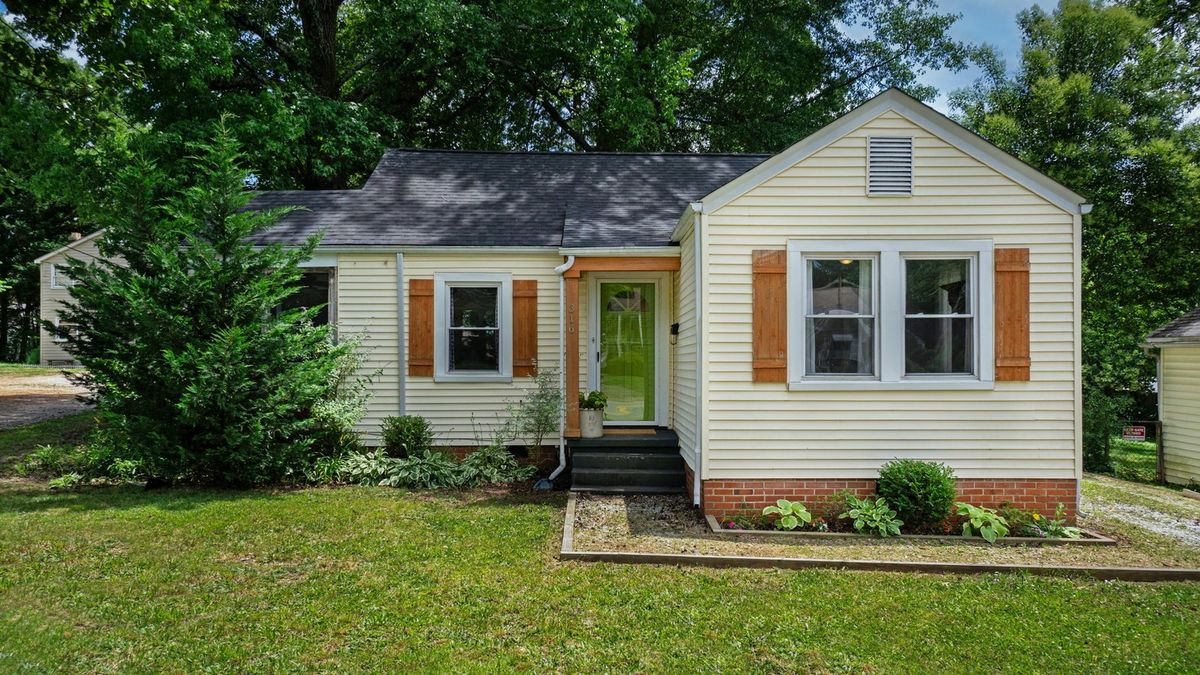
Picture a buyer standing in your house five years from now. They've narrowed their search to two homes on the same block — similar age, similar price, similar layout. Yours has a full property history they can pull up on their phone: every receipt, every inspection, every service ticket, every warranty, going back to the day you bought the place. The other one comes with a Google Drive link and a seller who says, "everything you need is in there."
Same documents, on paper. Different artifacts entirely. One is a story you're asking the buyer to take on faith. The other is something they can verify. By the time you're sitting at the closing table, that distinction is worth real money — and most homeowners haven't even noticed the question is being asked.
Why a folder of PDFs isn't proof
Here's the part most homeowners don't realize: a folder of PDFs in cloud storage proves you have the documents. It does not prove the documents are real. A scanned receipt in a Drive folder can be edited. The metadata can be changed. The "modified date" reflects the file system, not when the work was actually done. None of this matters when the documents are for you. All of it matters the moment someone else has to rely on them — a buyer's agent, an insurance adjuster, a lender, an estate attorney, a probate court.
The trust gap has gotten worse in the last two years, not better. According to Entrust's 2025 Identity Fraud Report, digital document forgeries now account for 57% of all document fraud — a 244% jump in a single year, and a 1,600% spike since 2021. Real estate has become a particular target. In 2025, the FBI's Internet Crime Complaint Center reported more than $275 million in losses from at least 12,368 real estate fraud victims, much of it driven by AI-generated documents and deepfaked communications. The world a buyer is buying into in 2026 is one where a scanned PDF, by itself, has stopped being credible.
This is the asymmetric trust problem that sits underneath every property transaction. The seller knows the documentation is real. The buyer has to take their word for it. Until recently, "I have the receipt" was enough to close that gap. Increasingly, it isn't — and buyers, agents, insurers, and lenders are starting to act accordingly. The discount they're applying isn't always a number on a counteroffer. Sometimes it's a contingency, sometimes it's a missing buyer in your driveway, sometimes it's an offer that just never comes in.
What Digital Evidence actually does
This is the gap Digital Evidence is built to close. When a document is uploaded to Real Estate Ledger, a lightweight agent computes a cryptographic hash — a unique fingerprint of that exact file — at the moment of upload, signs it, and writes it to an immutable, decentralized ledger. The document itself stays encrypted in your account; the fingerprint becomes a permanent, tamper-evident record of what that document was, on the date it landed. Anyone you grant access to can verify, independently, that the file has not been altered since it was filed.
The plain-language version: REL doesn't just hold your records. It proves they haven't been touched. The receipt for the roof you replaced in 2026 is still the same receipt in 2031, and there is a verifiable proof of that fact. No "trust me." No screenshots that could have been faked last Tuesday. No relying on a contractor's email account that may not exist by the time you go to sell.
That moat is what turns a folder of files into a property history with the same evidentiary weight as a CARFAX report — which is exactly what one of our early users discovered. Scott Martin, a retired Air Force brigadier general in Dayton, Ohio, listed his home on a Wednesday in January with his REL Property Guidebook attached. By Friday he had hosted 17 private showings and received 7 strong offers. He canceled the open house, went under contract on Day 3, and closed at $30,000 above asking with full appraisal gap coverage. His buyer's agent told him afterward: "If I had a dollar for every client who asked for a CARFAX-like report for a home, I'd be rich." The premium and the speed weren't because Scott had documents. They were because his documents could be trusted by someone who didn't know him.
Short-term versus long-term value
The short-term payoff is the one most homeowners notice first: a faster sale, stronger offers, fewer renegotiation requests when the inspector finds something that turns out to already be documented and addressed. According to NAR's 2024 Profile of Home Buyers and Sellers, 82% of recent buyers report at least one regret about the home they bought, and the single most common regret — 28% of all respondents — is that the home requires too much maintenance. Buyers aren't afraid of houses that need work. They're afraid of houses with hidden work. A documented, verifiable history doesn't just signal that you took care of the place. It removes the fear that there's something you didn't tell them. Zillow Research has found, separately, that listings with more complete information sell measurably faster. Verified information sells faster still.
The long-term value is where this really compounds. A home outlives its owners. The typical American property changes hands every dozen years; over a 50-year span, your house will see four or five owners, each one inheriting whatever the previous owner saved or didn't. Most of what gets passed along is a box of receipts in a kitchen drawer that loses about half its contents with every move. A tamper-evident record on Digital Evidence doesn't degrade. It survives owners, platforms, and life events — refinancing, divorce, estate transfers, insurance claims, probate, contractor disputes — every place where the question "is this real?" suddenly costs money to answer wrong.
How this differs from everything else on the market
This is also where REL splits from every other "home management app" out there. Most of those products are organizers — they store the document, label it, give you a tidy interface. Useful. Important even. But storing a document is not the same as proving it. A folder of receipts in cloud storage gets you to the same place as a folder of receipts in a binder: you have the records, and the next person has to take your word that they're real. REL is the only platform built to answer the harder question. We don't compete on which app has the prettier dashboard or the most warranty alerts. We compete on whether anyone other than you can rely on what's inside.
The CARFAX analogy isn't a metaphor; it's a category playbook. A used car with a verifiable service history is worth more than the same car without one — not because of the documents, but because the buyer can trust them. The same logic is now arriving in real estate, and the homes that win in the next decade are going to be the ones whose owners have been keeping a record buyers can verify. The fingerprint isn't a feature. It's the line between a story and evidence.
Keep your property documents organized
Real Estate Ledger automatically categorizes every document, links it to the right property, and makes it searchable. No credit card required.
Get started free