Real Estate Is the First Industry to Need an Evidence Layer. It Won't Be the Last.
Real estate is the first industry hitting a hard truth: storing documents is not the same as proving them. Here's what an evidence layer is, why it starts with property, and where it goes next.
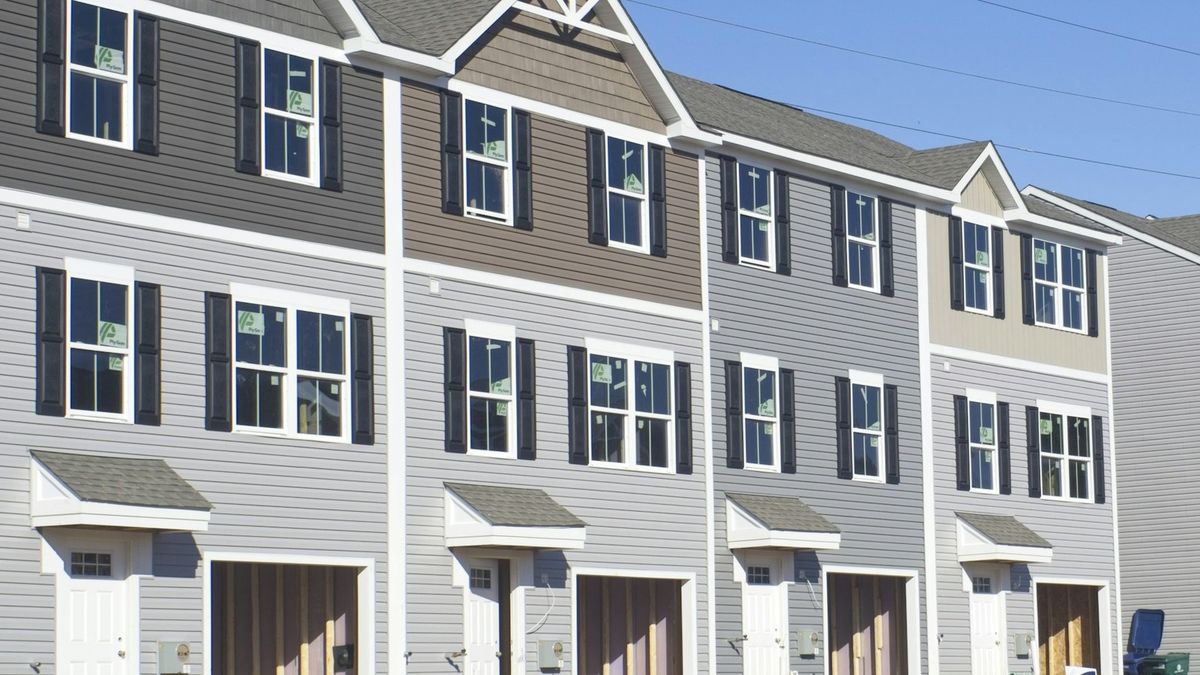
When Ed Oravetz handed over the keys at The Terraces Townhomes, his 60-unit Blue Ridge Mountain community, he told buyers something most builders never get to say. "Most builders hand you a house. We're handing homeowners the proof." Every permit, every inspection, every warranty, every choice of paint and fixture and finish: all of it organized into a verifiable record that came with the home itself.
That sentence captures something quietly enormous about where real estate is headed. The buyers walking into Ed's units in 2026 are not just buying square footage. They are buying a record they can rely on. And builders, agents, lenders, and homeowners are all starting to figure out that the difference between "having documents" and "having a record someone else can verify" is becoming the most important question in the transaction.
The hidden documentation tax
Every new home in America comes with a documentation burden that almost nobody talks about. Builders track post-closing service requests at scale. 2-10 Home Buyers Warranty, which covers roughly one in five new homes in the United States, reports an average of 10 post-closing service items per home and identifies "clear claim-intake documentation" as one of the three biggest elements of post-closing support builders ask for. That gap, between what the builder knows and what the homeowner can prove later, is where reputations and resale values quietly get built or lost.
The same pattern shows up in every direction you look. An HOA board where institutional memory walks out the door when one person retires. A real estate agent trying to substantiate a "recently replaced" claim in a listing description. A lender asking for proof of a permit that was filed eleven years ago. A buyer's inspection that catches something documented and addressed years before, but not in any place the seller can find. The records exist somewhere. The question is whether they can be trusted, and whether they can travel.
This is the pattern that connects real estate to a much broader shift. Industries that run on records, which is to say, all of them, are quietly converging on the same realization: more storage is not the answer. What they need is verifiability.
What an evidence layer actually does
This is what Real Estate Ledger is built to provide for housing. When a builder, owner, or property manager uploads a document to REL, the file is fingerprinted through Digital Evidence at the moment of upload, creating an immutable, tamper-evident record of what the document was on that exact date. The document itself stays encrypted in the account. The fingerprint is what makes the record portable and trustable: anyone you grant access to, a buyer's agent, an insurance underwriter, a lender, an attorney, a future owner, can independently verify that the file has not changed since it was filed.
That is what an evidence layer is. Not a storage app. Not a folder. A foundation that turns a property's history into something the next person can actually rely on.
It is also what made Ed's pitch land. The Terraces Townhomes did not just deliver finished units. They delivered a verifiable property record alongside each closing, encoding decisions and warranties and inspections into a record the homeowner could pass forward at resale. The documentation is no longer an afterthought to the transaction. It becomes part of the asset itself, and a competitive differentiator in the next market cycle.
For agents, the implications are direct. Listings backed by a verified property record get to make stronger claims, faster, with less back-and-forth on inspections. For investors and multi-property owners, an evidence layer turns scattered files across portfolios into a single auditable history. For homeowners, the record outlives the platform: the proof of what was filed, and when, persists.
Real estate is just the first industry to need this
Real estate is the most obvious place to build an evidence layer because property is so document-heavy and so long-lived. But the same shift is unfolding across every industry that runs on records. AI agents are about to act on those records autonomously. Gartner forecasts that 40% of enterprise applications will feature task-specific AI agents by the end of 2026, up from less than 5% in 2025. Those agents cannot tell a real document from a fabricated one. They will need verifiable inputs to do anything useful, which is the same problem TheUpsider is working on for AI products. Online gaming has been navigating it for years: OpenPoker treats provably fair outcomes as table stakes, because high-stakes platforms cannot run on trust alone. Consumer products are converging on the same primitive too, which is what Dor brings to the homeowner side of the property record. Underneath all of them sits Constellation Network, the substrate that makes the verification math work in the first place.
Why a real estate evidence layer compounds
Real estate is the test case worth watching closely because property outlives its owners. According to the 2025 NAR Profile of Home Buyers and Sellers, the typical home seller in 2025 had owned their property for 11 years before selling, an all-time high. Over a 50-year span, a single house may pass through four or five owners, each one inheriting whatever the previous one saved or did not. The receipts, permits, warranties, and inspection reports that survive that journey today are the ones that happened to get sent through email or printed on paper. That is not a system. That is a coincidence.
A tamper-evident, verifiable property record changes that math. It survives owners, life events, refinancing, divorce, estate transfers, insurance claims, contractor disputes, and probate. The documentation no longer depends on whether the seller can find the carton in the basement. It depends only on whether the record was filed in the first place. For builders, that means proof of build quality that compounds value at every resale. For agents, it means listings whose claims actually hold up under buyer scrutiny. For homeowners, it means the difference between a story and evidence when the question of trust suddenly costs money to answer wrong.
What comes next
The shift toward verifiable records is not a real estate story. It is a record-keeping story playing out across every industry that produces documentation people care about. Real estate just happens to be where the stakes are highest, the timelines are longest, and the gap between "having records" and "having proof" is widest. Builders, agents, and owners who get ahead of this are not chasing a trend. They are building on the side of where every industry is going.
Keep your property documents organized
Real Estate Ledger automatically categorizes every document, links it to the right property, and makes it searchable. No credit card required.
Get started free