How to Keep Records for Your House: A Complete System That Pays for Itself
Learn what records to keep for your house, how long to store them, and the best systems for organizing property documents. Includes IRS retention timelines.
By the Real Estate Ledger Team
A retired Air Force general in Dayton, Ohio listed his home on a Wednesday in January. Within three days, he received seven strong offers and sold for $30,000 above asking. The buyer's agent remarked, "If I had a dollar for every client who asked for a CARFAX-like report for a home, I'd be rich." The difference was not a luxury renovation — it was a documented property history. He had spent years organizing every receipt, permit, and service record into a structured system, starting with a simple folder structure and eventually migrating to a digital platform. The process of setting up that system took one weekend of scanning existing documents and ten minutes per month going forward.
Most homeowners understand the value of keeping records for their house, yet few have a reliable system. According to the IRS, you should retain documents affecting your home's tax basis for the entire ownership period, and at least three years after you sell. This guide walks through what records to keep, how to store house documents, and how to organize property records so they protect your investment.
Which Records Should You Keep for Your House?
The answer depends on the document category. Not every piece of paper deserves permanent storage, but critical records fall into five groups that together form a complete property history.
Ownership and title documents: your deed, title insurance policy, settlement statement (HUD-1 or Closing Disclosure), and survey. Keep these permanently. These establish your legal claim and original cost basis.
Financial records: mortgage statements, property tax receipts, and homeowners insurance policies. Retain these for the life of the loan or policy, plus at least three years after resolution. The IRS can audit returns up to six years back if they suspect a 25% income understatement, so erring on the side of retention is wise.
Improvement and renovation records: permits, contractor invoices, before-and-after photos, and material receipts. Keep these for as long as you own the home, then three years beyond the sale. According to IRS Publication 523, capital improvements increase your cost basis and can reduce capital gains tax when you sell.
Maintenance and repair logs: HVAC service records, plumbing repairs, roof inspections, and appliance servicing. Retain these for at least seven years or the useful life of the system. These prove you maintained major systems, which matters at sale time and for warranty claims.
Warranty documents: manufacturer warranties, home warranty contracts, and extended coverage plans. Keep these until the coverage expires and any related claims are resolved.
| Document Category | Retention Period | Why It Matters |
|---|---|---|
| Deed and title insurance | Permanently | Proves ownership, establishes legal claim |
| Settlement/closing statements | Permanently | Establishes original cost basis for tax purposes |
| Mortgage statements | Life of loan + 3 years | Tax deductions, refinancing, payoff verification |
| Property tax receipts | 7 years minimum | Tax deductions, proof of payment |
| Improvement receipts | Ownership + 3 years after sale | Increases cost basis, reduces capital gains tax |
| Maintenance records | 7 years or system lifespan | Warranty claims, resale negotiation, insurance |
| Insurance policies | Life of policy + 3 years | Claims history, coverage verification |
| Warranty documents | Until expiration + resolution | Filing claims, transferring coverage to buyers |
Build a Hybrid Storage System: Digital Backbone, Physical Backup
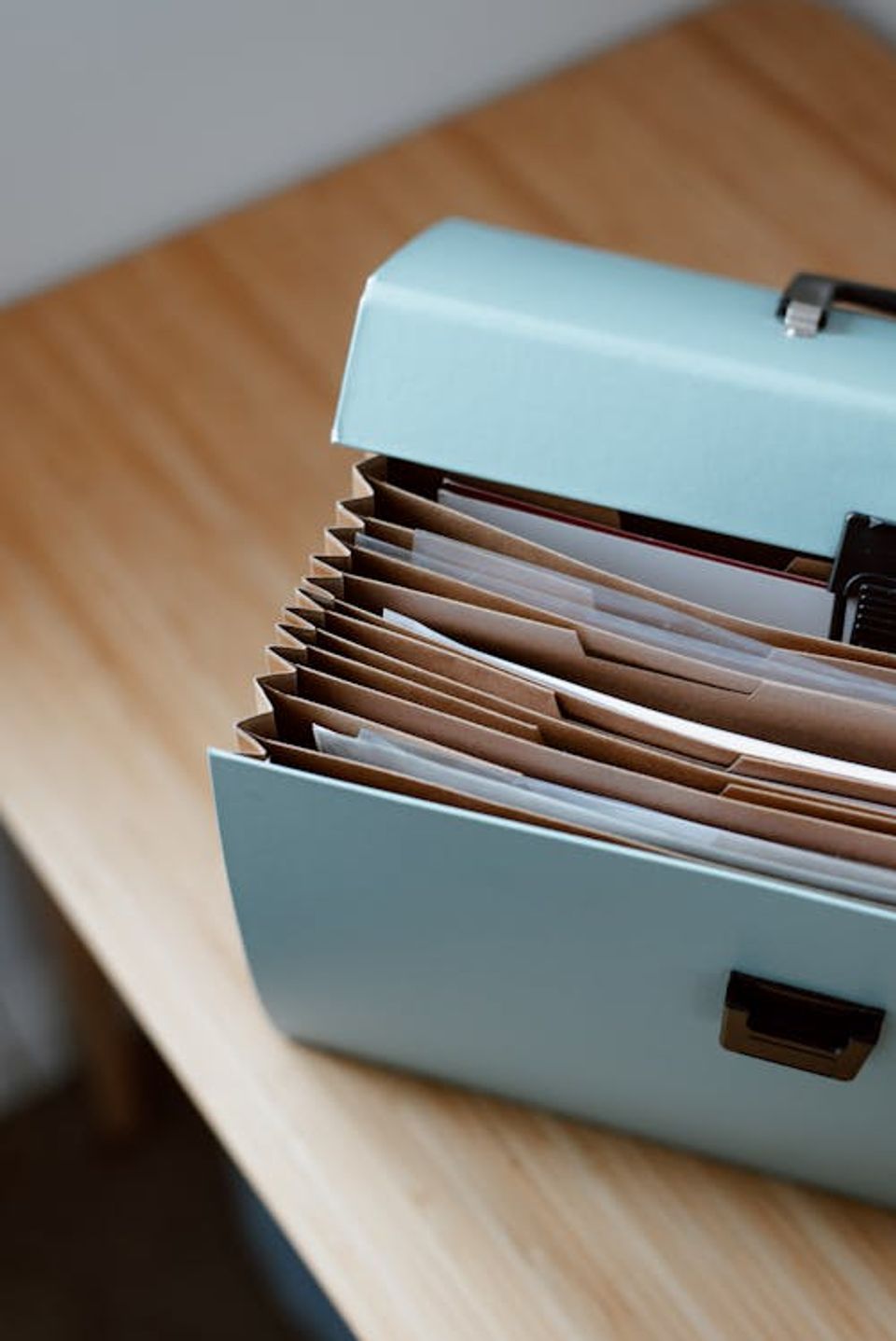
The most resilient approach to storing house documents combines digital accessibility with physical backup for irreplaceable originals. Here is a practical three-tier system.
Tier 1: Digital primary. Scan every document and store in a cloud-based system with automatic backup. According to Bankrate, hidden homeownership costs average $21,000 per year, and tracking expenses digitally makes tax preparation and insurance claims dramatically faster.
Tier 2: Physical originals. Keep original deeds, title policies, and closing statements in a fireproof safe or safe deposit box.
Tier 3: Offsite backup. Ensure your records survive a house fire or flood. If they exist only in a basement filing cabinet, a single disaster eliminates both the house and its history.
| Storage Method | Pros | Cons | Best For |
|---|---|---|---|
| Dedicated property management platform | AI categorization, search, sharing, verified timestamps | Monthly cost | Homeowners who want a complete system |
| Cloud storage (Google Drive, Dropbox) | Free or low-cost, accessible anywhere | No property-specific organization, manual filing | Budget-conscious homeowners with few documents |
| Filing cabinet | No tech required, tactile | Unsearchable, vulnerable to fire/flood, single location | Supplementing digital storage with physical originals |
| Scanner + external hard drive | One-time cost, full control | No offsite backup, no search across documents | Tech-savvy homeowners who prefer local storage |
For a deeper dive into organizing your documents by category, see our guide on how to organize home documents.
Set Up a Capture Routine That Sticks
A record-keeping system only works if you use it consistently. The biggest reason homeowners lose track of property records is not a lack of tools — it is a lack of habit.
At the point of transaction: Photograph or scan every receipt, invoice, and permit the day you receive it. Waiting creates a backlog that never gets cleared.
Monthly: Review and file utility bills, mortgage statements, and any maintenance invoices from the past 30 days. This takes fewer than 15 minutes per month.
Seasonally: After each major maintenance cycle (spring HVAC tune-up, fall gutter cleaning, winter pipe insulation), log the completed work with date, vendor, cost, and any photos.
Annually: At tax time, verify that all improvement receipts from the year are digitized and categorized. Cross-check against your bank statements for any missing entries. The IRS recommends year-round recordkeeping rather than scrambling at filing time.
Consider this scenario: a homeowner in Denver spent $8,200 replacing a furnace in 2019 but never saved the receipt. When she sold in 2024, she could not add that $8,200 to her cost basis. With a profit of $280,000, she owed capital gains tax on the full amount above the $250,000 exclusion, an extra $4,500 in tax that a single receipt would have eliminated.

What Records to Keep for Tax and Resale Purposes
Not every record carries equal weight. When it comes to taxes and resale, two categories deserve extra attention.
Maintenance history for resale affects your negotiating position. Buyers and inspectors treat undocumented systems as worst-case scenarios, requesting credits that documented maintenance history can eliminate. For warranty tracking specifically, see our guide on how to keep track of home warranties. If you need a structured format for logging maintenance work, our home maintenance log template provides a ready-to-use starting point.
Common Mistakes That Cost Homeowners Money
Keeping only what the bank requires. The records that matter most at resale (improvement receipts, maintenance logs, permit documentation) are ones no lender ever asks for.
Relying on memory for vendor details. Three years from now, you will not remember the contractor who installed your water heater. Log vendor names, license numbers, and contact details with every job.
Storing everything in one location. A filing cabinet or single hard drive means one event can erase decades of records. Always maintain at least two copies in separate locations.

The Record You Wish You Had Started Keeping Years Ago
The best time to start keeping records for your house was the day you bought it. The second-best time is today. Start with your most recent improvements and work backward, digitizing what you can find and logging what you remember. Even a partial history is dramatically more valuable than none at all.
Frequently Asked Questions
How long should I keep home improvement receipts?
Keep all home improvement receipts for as long as you own the property, plus at least three years after you sell. The IRS can audit up to six years back if they suspect underreporting, so longer retention is safer.
What is the best way to store house documents digitally?
Use a cloud-based system with automatic backup and consistent file naming. Scan documents at the point of receipt, organize by category (ownership, financial, improvements, maintenance, warranties), and ensure your system includes search functionality.
Do I need to keep paper copies of property records?
Keep physical originals of irreplaceable documents like your deed and title insurance in a fireproof safe. For everything else, high-quality digital copies are sufficient and far easier to search, share, and back up.
What records should I give a buyer when selling my house?
Prepare a property package including maintenance history, improvement receipts and permits, appliance manuals, warranty information, utility cost history, and vendor contacts. Documented histories reduce buyer risk perception and strengthen your negotiating position.
Can I use photos as proof of home improvements?
Yes, timestamped photographs serve as supporting evidence. They work best paired with receipts and permits, but standalone photos with embedded date metadata can establish when work was completed.
Build Your Property's Story Starting Today
Real Estate Ledger gives you a single, organized home for every property document — with AI-powered categorization that files records automatically and verified digital evidence that proves when documents were added. Think of it as building a CARFAX for your home. Get started free for up to 10 properties — no credit card required.
Get started freeRelated Guides
How to Organize Home Documents the Right Way
Learn how to organize home documents with a proven 5-step system. Covers digital storage, filing categories, and retention timelines backed by IRS guidelines.
5 min readThe Best Home Maintenance Tracker: 4 Methods Compared
Compare the best home maintenance tracker options: paper logs, spreadsheets, apps, and archive systems. Honest pros, cons, and a two-layer setup that lasts.
7 min readWhat to Do After Closing on a House: The First 30 Days, Organized
What to do after closing on a house, organized day by day. Documents to file, systems to inventory, and the records that protect the next 30 years.
11 min readInherited Property Documentation: What You Need and Where to Find It
Essential guide to inherited property documentation. Learn what records to gather, how to navigate probate paperwork, and organize estate property documents.
8 min read