How to Document a Home Renovation the Right Way
Learn how to document a home renovation properly. Capture permits, receipts, and before/after photos that boost resale value and support tax deductions.
By the Real Estate Ledger Team | Last updated: April 2026
Americans are projected to spend a record-breaking $524 billion on home renovations in early 2026, according to the Harvard Joint Center for Housing Studies' Leading Indicator of Remodeling Activity. Yet the vast majority of that investment goes undocumented beyond a few progress photos on a phone and a stack of receipts in a kitchen drawer. When it comes time to sell, file taxes, or submit an insurance claim, the absence of organized renovation documentation turns a value-adding improvement into a he-said-she-said negotiation.
Knowing how to document a home renovation is the difference between recovering your investment and watching it evaporate. This guide covers the full documentation workflow, from pulling permits to photographing the finished product, so every dollar you spend is recorded, provable, and recoverable.
Why Renovation Documentation Matters More Than You Think
On average, homeowners recover about 74 cents for every dollar spent on major remodeling projects, according to the 2025 Cost vs. Value Report by Zonda. But that average masks enormous variation. A garage door replacement can return over 100% of its cost, while an upscale bathroom remodel might return only 30-40%. What separates the high end of those ranges from the low end is not just the quality of the work — it is the quality of the proof.
Renovation documentation for resale serves three distinct purposes:
- Buyer confidence. A documented renovation with permits, contractor licenses, and inspection reports signals that the work was done professionally and to code. Buyers pay premiums for certainty.
- Tax basis adjustment. The IRS allows homeowners to add the cost of capital improvements to their home's cost basis, reducing capital gains tax when they sell. But you need receipts, invoices, and proof of payment. The IRS does not accept estimates.
- Insurance recovery. If a renovation is damaged or destroyed, your insurance payout depends on documented replacement cost, not your memory of what you spent.
The Five Documents Every Renovation Needs
Regardless of whether you are adding a deck or gutting a kitchen, every renovation project should generate these five core documents:
| Document | What to Capture | When to Capture It |
|---|---|---|
| Permits | Permit number, scope of work, issuing authority, inspection dates | Before work begins |
| Contractor Agreement | Scope, timeline, cost breakdown, payment schedule, warranty terms, license number | Before work begins |
| Receipts & Invoices | Itemized costs for materials and labor, payment method, dates | As incurred |
| Progress Photos | Before, during (at each milestone), and after — wide shots and detail shots | Throughout project |
| Inspection Records | Inspector name, pass/fail status, correction notices, final sign-off | At each required inspection |
Missing even one of these creates a documentation gap that weakens your position during resale negotiations, insurance claims, or tax audits. The IRS requires that taxpayers retain records supporting capital improvement deductions for the entire period of ownership plus three years after the sale.
For a dedicated tracking template you can use during your project, see our home renovation project tracker.
How to Photograph a Renovation for Maximum Documentation Value
Photographs are the most powerful and most frequently bungled element of home renovation record keeping. A few blurry phone shots of the finished countertop do not cut it. Here is a systematic approach:
Before photos. Photograph every surface, fixture, and angle of the space before demolition begins. Include wide shots that show the full room and close-ups of existing conditions (especially any damage or wear). These establish the baseline that makes your "after" photos meaningful.
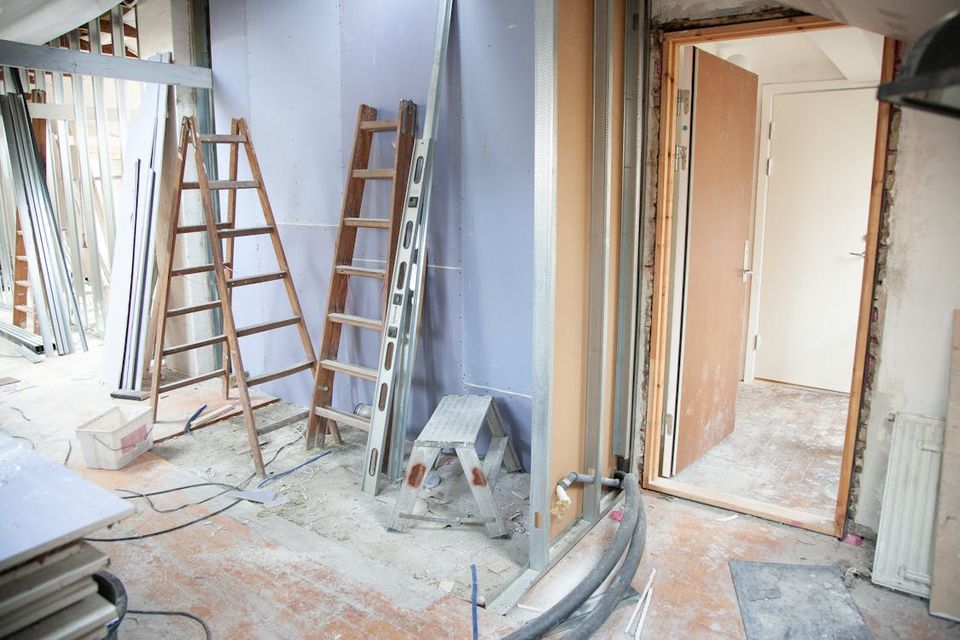
During photos at structural milestones. Capture the space after demolition, after framing changes, after rough-in (plumbing, electrical, HVAC), and after insulation but before drywall. These "hidden" stages document work that becomes invisible once walls are closed. If a plumbing issue surfaces three years later, pre-drywall photos can prove the original installation was done correctly.
After photos. Photograph the completed renovation from the same angles as your "before" shots. Include detail shots of fixtures, hardware, and finish materials. These become your primary resale marketing assets and insurance documentation.
Photo metadata. Most smartphones automatically embed date, time, and GPS coordinates in photo metadata. Do not strip this data. It provides built-in verification that the photos were taken at the property on the dates claimed.
The power of documented renovations is visible in real outcomes. Scott Martin, a retired Air Force Brigadier General in Dayton, OH, carefully documented his home's improvements and maintenance history using Real Estate Ledger. When he listed the property on a Wednesday in January, the thorough documented history, including renovation records with permits, receipts, and before-and-after photos, generated 17 private showings over three days and seven strong offers. The home sold $30,000 above asking with appraisal gap coverage. Martin's buyer's agent put it simply: "If I had a dollar for every client who asked for a CARFAX-like report for a home, I'd be rich." The documented renovation history turned improvements from claims into verified proof, giving buyers the confidence to compete aggressively.
Permits and Inspections: The Non-Negotiable Paper Trail
Unpermitted work is a deal killer during resale. Buyers' inspectors and appraisers look for permit records, and lenders may refuse to finance a home with known unpermitted improvements. Even in jurisdictions with less rigorous enforcement, the absence of permits creates legal liability that transfers to the seller.
The Hanson Bridgett analysis of California's 2026 construction laws highlights an increasing trend toward stricter documentation requirements, including subcontractor disclosure rules and tighter inspection certification standards. This trend extends beyond California. Municipalities nationwide are raising documentation expectations for residential renovation work.
For every permitted project, retain:
- The original permit application with the approved scope of work
- Every inspection report, including any correction notices and re-inspection results
- The final inspection sign-off or certificate of completion
- Any variance or exception approvals
If you have completed work that should have been permitted but was not, consult your local building department about retroactive permitting. The cost is typically modest (a few hundred dollars plus the standard permit fee), and the documentation value at resale far exceeds the expense.
Our home renovation permit checklist details which projects typically require permits by category and jurisdiction type.

Tracking Costs for Taxes and Capital Gains
Every improvement receipt you save is money in your pocket when you sell. The IRS distinguishes between repairs (which are not added to your cost basis) and capital improvements (which are). Understanding this distinction shapes what you document and how:
- Capital improvements increase the home's value, extend its useful life, or adapt it to new uses. Examples: adding a room, replacing a roof, installing central air conditioning, remodeling a kitchen. These costs are added to your cost basis.
- Repairs restore the home to its existing condition. Examples: fixing a leaky faucet, patching a wall, replacing a broken window pane. These do not adjust your cost basis.
For a $400,000 home where the homeowner invested $85,000 in documented capital improvements over a decade, the adjusted cost basis rises to $485,000. If the home sells for $650,000, the taxable capital gain drops from $250,000 to $165,000, a difference that could save $12,750 in federal capital gains tax (at the 15% rate) for gains exceeding the $250,000 single or $500,000 married exclusion.
Keep every receipt, every invoice, and every contractor payment record. Organize them by project, not by date, so you can calculate the total investment in each improvement when the time comes. For a step-by-step system to digitize and protect these records, see our digital property records guide.
Every Receipt Tells a Story
A renovation is a financial commitment and a physical transformation — but without documentation, it is also a fading memory. The receipts, photos, and permits you capture today become the proof that protects your investment tomorrow. Whether you sell next year or in twenty years, the homeowner who can hand a buyer a complete, organized renovation history will always come out ahead.
Frequently Asked Questions
What is the minimum documentation I need for a home renovation?
At minimum, keep the contractor agreement, all receipts and invoices, the building permit (if required), and before-and-after photographs. For tax purposes, you also need proof of payment — canceled checks, credit card statements, or bank records showing the transaction. This baseline protects you for resale negotiations, insurance claims, and capital gains calculations.
Do I need to document renovations I do myself?
Yes. DIY renovations should be documented with the same rigor as contractor work. Save all material receipts, photograph every phase, and retain any permit records. While you cannot deduct your own labor for tax purposes, the material costs of capital improvements still adjust your cost basis. Documentation also protects you during resale if a buyer questions whether the work was done to code.
How long should I keep renovation receipts?
Keep all capital improvement receipts for as long as you own the property plus three years after selling it. The IRS may audit returns for up to three years (or six in some cases), and your cost basis documentation must cover the entire ownership period. Digital storage makes indefinite retention practical at no ongoing cost.
Will documenting my renovation actually increase my home's resale value?
Documented renovations consistently command higher buyer confidence and can reduce inspection-related negotiation concessions. While documentation alone does not increase value, it preserves the value that the renovation created. Buyers who can verify that a kitchen remodel was permitted, inspected, and completed by a licensed contractor perceive less risk — and risk reduction translates directly to offer price.
What happens if I renovate without pulling permits?
Unpermitted work creates legal and financial risk at resale. Buyers' inspectors may flag the work, appraisers may exclude its value, and lenders may require retroactive permitting before approving a loan. In some states, sellers must disclose known unpermitted work. The cost of retroactive permitting is almost always less than the price reduction buyers will negotiate for undocumented work.
Document Your Renovation with Real Estate Ledger
Real Estate Ledger transforms your renovation documentation from scattered files into a verified property history. Upload receipts, permits, and photos — AI automatically categorizes everything by project and document type. When you sell, generate a professional property report that shows buyers exactly what was done, when, and by whom. Get started free for up to 10 properties — no credit card required.
Get started freeRelated Guides
The Best Home Maintenance Tracker: 4 Methods Compared
Compare the best home maintenance tracker options: paper logs, spreadsheets, apps, and archive systems. Honest pros, cons, and a two-layer setup that lasts.
7 min readInherited Property Documentation: What You Need and Where to Find It
Essential guide to inherited property documentation. Learn what records to gather, how to navigate probate paperwork, and organize estate property documents.
8 min readHow to Keep Records for Your House: A Complete System That Pays for Itself
Learn what records to keep for your house, how long to store them, and the best systems for organizing property documents. Includes IRS retention timelines.
6 min readHow to Document Home Improvements: A Guide for Tax Savings and Resale Value
Learn how to document home improvements to reduce capital gains taxes and maximize resale value. IRS requirements, what qualifies, and a tracking system.
5 min read