Capital Gains, Cost Basis, and Home Improvements: A Documentation Guide
Learn how home improvements increase your cost basis and reduce capital gains taxes. Documentation guide with IRS rules, real examples, and tracking tips.
By the Real Estate Ledger Team
Americans spent roughly $603 billion on home remodeling projects in 2024, according to the National Association of Realtors 2025 Remodeling Impact Report. Yet a surprising number of those homeowners will fail to capture the full tax benefit of their investments when they eventually sell. The reason is straightforward: they never documented the work. When it comes to capital gains and cost basis, home improvements you cannot prove might as well not exist in the eyes of the IRS.
The federal tax code allows you to exclude up to $250,000 in profit ($500,000 for married couples filing jointly), but gains above that threshold are taxed at 15% or 20%, plus a potential 3.8% surtax, according to IRS Topic No. 701. Every dollar added to your cost basis through documented capital improvements shrinks your taxable gain. This guide explains what qualifies and how to track home improvements for capital gains purposes.
What Is Cost Basis and Why Does It Matter?
Your cost basis is the financial starting point the IRS uses to calculate profit when you sell your home. It begins with your original purchase price (including certain closing costs like title insurance and recording fees) and grows each time you make a qualifying capital improvement. When you sell, the IRS subtracts your adjusted basis from the net sale price to determine your capital gain.
Here is a simplified example. Suppose you purchased a home for $350,000 in 2015. Over the next decade, you invested $85,000 in documented capital improvements: a kitchen remodel ($42,000), a new HVAC system ($12,000), a bathroom addition ($22,000), and a new roof ($9,000). Your adjusted cost basis is now $435,000. If you sell the home in 2026 for $725,000, your capital gain is $290,000 rather than $375,000. For a married couple filing jointly, that $290,000 falls entirely within the $500,000 exclusion — meaning zero tax owed. Without those documented improvements, the $375,000 gain would exceed the exclusion by $75,000, potentially costing the couple $11,250 or more in federal taxes at the 15% long-term capital gains rate.
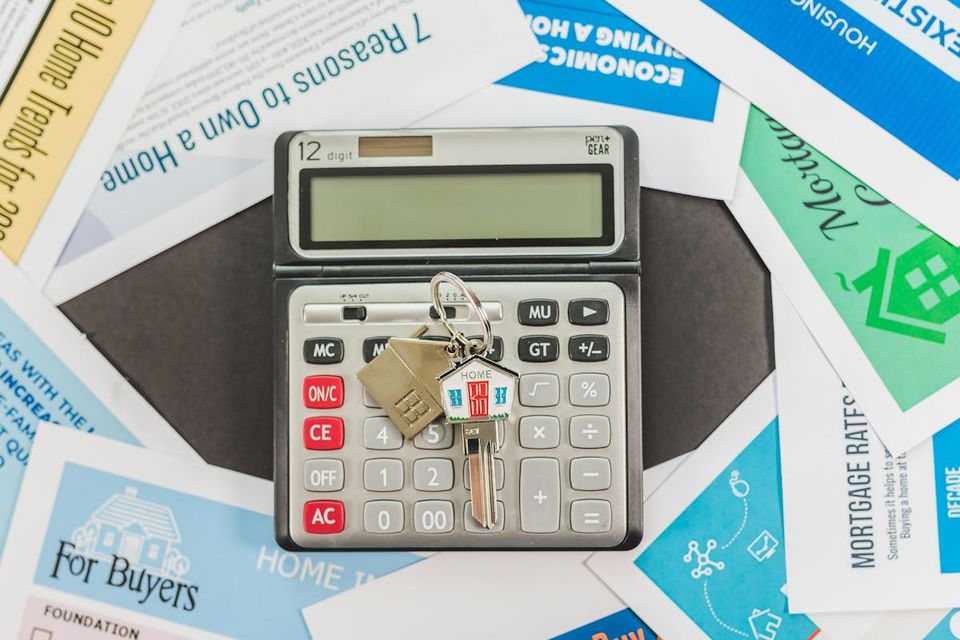
Capital Improvement vs. Repair: What the IRS Actually Allows
Not every dollar you spend on your home qualifies as a capital improvement. According to IRS Publication 523, a capital improvement must add value to your home, prolong its useful life, or adapt it to a new use. It must also be a permanent addition, not routine maintenance.
The distinction matters because repairs maintain your home in its current condition while improvements materially enhance it. But there is a gray area: repairs done as part of a larger remodeling project can often be included in the total improvement cost.
| Category | Capital Improvement (Increases Basis) | Repair (Does NOT Increase Basis) |
|---|---|---|
| Kitchen | Full remodel with new cabinets, countertops, layout changes | Fixing a leaky faucet, replacing a garbage disposal |
| Roof | Complete roof replacement | Patching a few shingles |
| HVAC | Installing central air conditioning or a new furnace | Annual filter replacement, duct cleaning |
| Bathroom | Adding a new bathroom or full gut renovation | Re-caulking a tub, replacing a toilet flapper |
| Exterior | Building a deck, adding a fence, new driveway | Power washing siding, repainting trim |
| Insulation | Adding blown-in attic insulation, new windows | Applying weatherstripping |
| Landscaping | Permanent hardscaping, retaining walls, irrigation system | Mowing, seasonal planting, mulching |
According to IRS Publication 551, you increase your basis by all items properly added to a capital account, including the cost of any improvements having a useful life of more than one year.
How to Document Home Improvements for Capital Gains
Proper documentation is the linchpin of cost basis adjustment. The IRS does not require you to submit improvement records with your return, but you must be able to produce them if audited. The agency recommends keeping records for as long as you own the home plus at least three years after filing the return that reports the sale.
Step 1: Save every receipt and contract. For each project, retain the signed contractor agreement, itemized invoices, and payment records (credit card statements, canceled checks, or bank transfers). If you did the work yourself, keep material receipts from hardware stores along with a dated log of the work performed.
Step 2: Photograph before, during, and after. Visual evidence is powerful. Take date-stamped photos before demolition begins, during construction, and once the project is complete. These images corroborate the scope and nature of the improvement.
Step 3: Keep permits and inspection reports. Any project that required a building permit creates an official municipal record that you did the work. Keep copies of permits, inspection sign-offs, and certificates of occupancy.
Step 4: Organize by project, not by date. Group all documents (contracts, receipts, photos, permits) into a single folder per improvement. This makes retrieval fast during a sale or audit.
A Real-World Scenario: The $18,750 Documentation Mistake
This is a common scenario that tax advisors and real estate CPAs encounter regularly. Consider a homeowner in Austin, Texas, who purchased a house for $310,000 in 2014 and sold it in 2026 for $820,000, a $510,000 gain. She is single, so her exclusion cap is $250,000. That leaves $260,000 in potentially taxable gain.
Over twelve years, she completed roughly $125,000 in improvements: a full kitchen renovation, master bath remodel, new windows throughout, a patio addition, and a complete HVAC replacement. With those improvements documented, her adjusted basis would be $435,000, and her taxable gain would drop to $135,000, meaning roughly $20,250 in federal tax at the 15% rate.
But she only kept receipts for $50,000 of the work. The remaining $75,000 in improvements, mostly paid in cash to contractors years earlier with no written contracts, could not be substantiated. Her provable adjusted basis was only $360,000, making her taxable gain $210,000 and her tax bill approximately $31,500. The missing documentation cost her $11,250 in unnecessary taxes.
The Bottom Line: Documentation Pays for Itself
In an era of rapid home price appreciation, more sellers are bumping against the $250,000/$500,000 exclusion limits than ever before. Tracking your home improvements for capital gains is not obsessive record keeping — it is protecting the return on investments you have already made. Start documenting today, and your future self will thank you at the closing table.
Frequently Asked Questions
How long should I keep home improvement records for tax purposes?
The IRS recommends keeping records for as long as you own the home, plus at least three years after filing the return that reports the sale. Many tax professionals suggest seven years after the sale, since the IRS has extended audit windows for substantial understatements of income.
Can I add the cost of DIY labor to my cost basis?
No. The IRS only allows materials and hired labor costs. Your own labor — even if you are a licensed contractor — cannot be included. Keep material receipts and document the scope of work with dated photographs.
What happens if I lose my home improvement receipts?
The IRS may disallow the cost basis adjustment during an audit. Try reconstructing records using bank statements, duplicate contractor invoices, building permit records from your municipality, or property tax assessments that reflect improvements.
Does the $250,000/$500,000 exclusion apply to investment properties?
No. The Section 121 exclusion applies only to your primary residence where you lived for at least two of the five years before the sale. Investment and rental properties follow different rules under Section 1031 and standard capital gains rates.
Start Tracking Before You Need the Records
The best time to organize your home improvement documentation is the day the project starts — not the week before closing. Real Estate Ledger makes this effortless. Upload receipts, contracts, and photos as each project finishes — the AI categorizes and links them to the right property and area automatically. When it is time to sell, generate a complete property guidebook that includes your documented improvement history, ready to hand to your CPA or real estate agent. Plans start at $1.99/month — try it free for 30 days, no credit card required.
Get started free